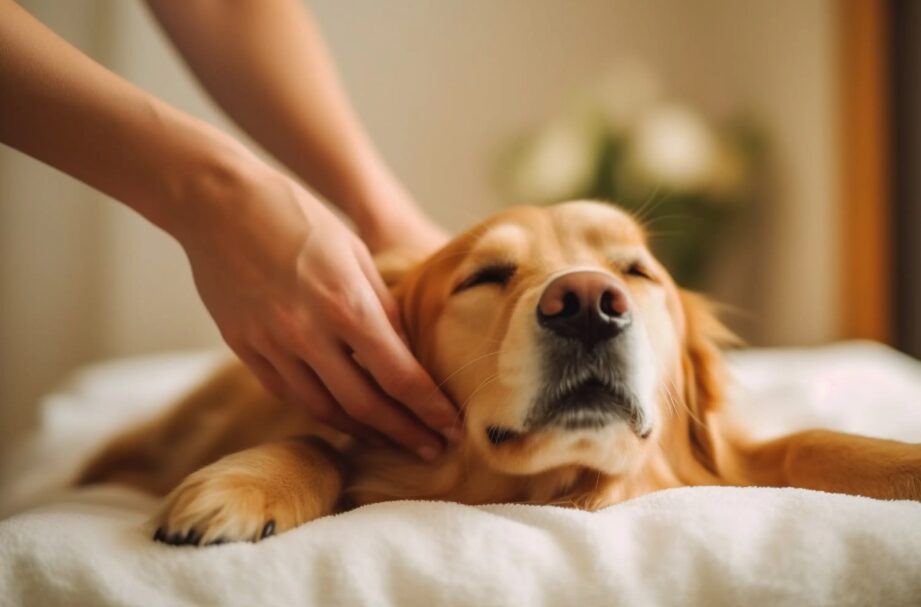
For dogs living with chronic stress, the world does not feel safe. Their nervous systems are often stuck in survival mode—cycling between hyperarousal (fight/flight) and shutdown (freeze). In this state, even everyday experiences can feel overwhelming. Focused touch and therapeutic massage, when used thoughtfully, can become a powerful tool to help these dogs find safety in their bodies again.
Grounded in autonomic nervous system science, touch has the capacity to directly influence regulation. But it must be used with intention, consent, and awareness—because for a dysregulated dog, not all touch feels safe.
Why Touch Matters for the Nervous System
The skin is the largest sensory organ in the body. When we engage it in slow, predictable, and gentle ways, we stimulate sensory receptors that communicate directly with the brain and vagus nerve—key players in parasympathetic (rest-and-digest) activation.
For dogs stuck in chronic sympathetic activation, focused touch can:
- Lower heart rate and respiratory rate
- Reduce circulating stress hormones
- Improve digestion and sleep
- Increase body awareness (proprioception and interoception)
- Support emotional regulation
- Deepen relational safety between dog and guardian
Slow, rhythmic strokes—particularly along large muscle groups or down the body in the direction of the fur—can encourage the nervous system to shift from survival into safety.
For dogs who have lived in prolonged stress, this shift is not just calming. It is healing.
Touch as Co-Regulation
Many dysregulated dogs struggle with self-regulation. They rely heavily on their environment to determine whether they are safe. This is where relational touch becomes powerful.
When a guardian offers slow, grounded, attuned contact—without urgency or agenda—the dog’s nervous system can borrow regulation from the human’s calm state. This is co-regulation.
The key elements are:
- Predictability – slow, consistent movements
- Pressure awareness – firm but gentle, not ticklish or abrupt
- Consent – the dog can move away at any time
- Attunement – watching for subtle signs of tension or release
Signs the touch is helping may include softening of the eyes, slower blinking, deeper breathing, a head drop, shifting weight, or a sigh. These are small but meaningful indicators of parasympathetic engagement.
Body Awareness and Trauma
Chronic stress and trauma often disconnect dogs from their bodies. They may appear restless, reactive, clumsy, hypervigilant, or alternatively, shut down and still. Focused touch can help restore body mapping—helping the brain reintegrate sensory input in a safe way.
This is especially valuable for dogs who:
- Startle easily
- Have difficulty settling
- Show compulsive behaviors
- Struggle with handling
- Have a history of neglect, abuse, or medical trauma
Gentle massage can improve circulation, reduce muscle tension held from prolonged stress postures, and increase comfort in their own skin.
However—and this is critical—touch must always be titrated. Too much intensity, too long, or in the wrong area can increase stress rather than reduce it.
When You Should Not Use Touch or Massage
Touch is not universally calming. In some dogs, especially those with trauma histories, touch can be activating or even threatening. It should not be used in the following situations:
- The Dog Is Actively in Fight-or-Flight
If a dog is barking, lunging, pacing, trembling, panting heavily, or hyper-focused on a trigger, their nervous system is in high sympathetic activation. Attempting to restrain, hold, or massage them in that moment can escalate stress.
Regulation must begin with environmental safety and distance—not hands-on intervention.
- The Dog Freezes or Becomes Very Still
Stillness does not always mean relaxation. A dog who stiffens, stops blinking, closes their mouth abruptly, or averts their gaze may be experiencing a freeze response. Continuing touch in this state can deepen shutdown or lead to defensive behavior.
Always look for softening—not compliance.
- The Dog Has Pain or Undiagnosed Medical Issues
Massage should never be used on areas of acute injury, inflammation, infection, or unexplained pain. Dogs in pain may guard themselves, and touch can increase stress hormones rather than decrease them.
Veterinary clearance is essential for dogs with orthopedic, neurological, or systemic conditions.
- The Dog Has a History of Handling Trauma
Some dogs associate touch with restraint, grooming trauma, punishment, or medical procedures. In these cases, touch must be reintroduced gradually, starting with proximity and consent-based interactions rather than direct contact.
- The Guardian Is Dysregulated
Dogs are exquisitely sensitive to human physiology. If you are anxious, rushed, frustrated, or emotionally flooded, your touch will carry that tension. In this case, co-regulation will not occur.
Regulate yourself first.
How to Begin Safely
If the dog is receptive and in a calm environment, begin with:
- Sitting beside rather than over the dog
- Starting in less vulnerable areas (shoulders, chest, side body)
- Using slow, steady strokes
- Watching breathing patterns
- Pausing frequently to allow the dog to choose continued contact
Short sessions—one to three minutes—are often more effective than prolonged ones. The goal is not a full massage routine. The goal is nervous system support.
Touch Is a Tool, Not a Fix
Focused touch is not a substitute for behavior modification, environmental management, enrichment, or medical care. It is one piece of a larger regulation framework.
For dysregulated dogs, healing happens through safety, predictability, nourishment, appropriate enrichment, and relational attunement. Touch can reinforce all of these—but only when the dog experiences it as safe.
When offered with consent, patience, and awareness, focused touch becomes more than physical contact. It becomes communication.
It says:
You are safe.
You are heard.
You do not have to survive this moment.
And for a nervous system that has been living in defense, that message matters.