When we talk about behavior problems in dogs, we often focus on training, obedience, or control. But behavior doesn’t start with obedience. It starts with the nervous system.
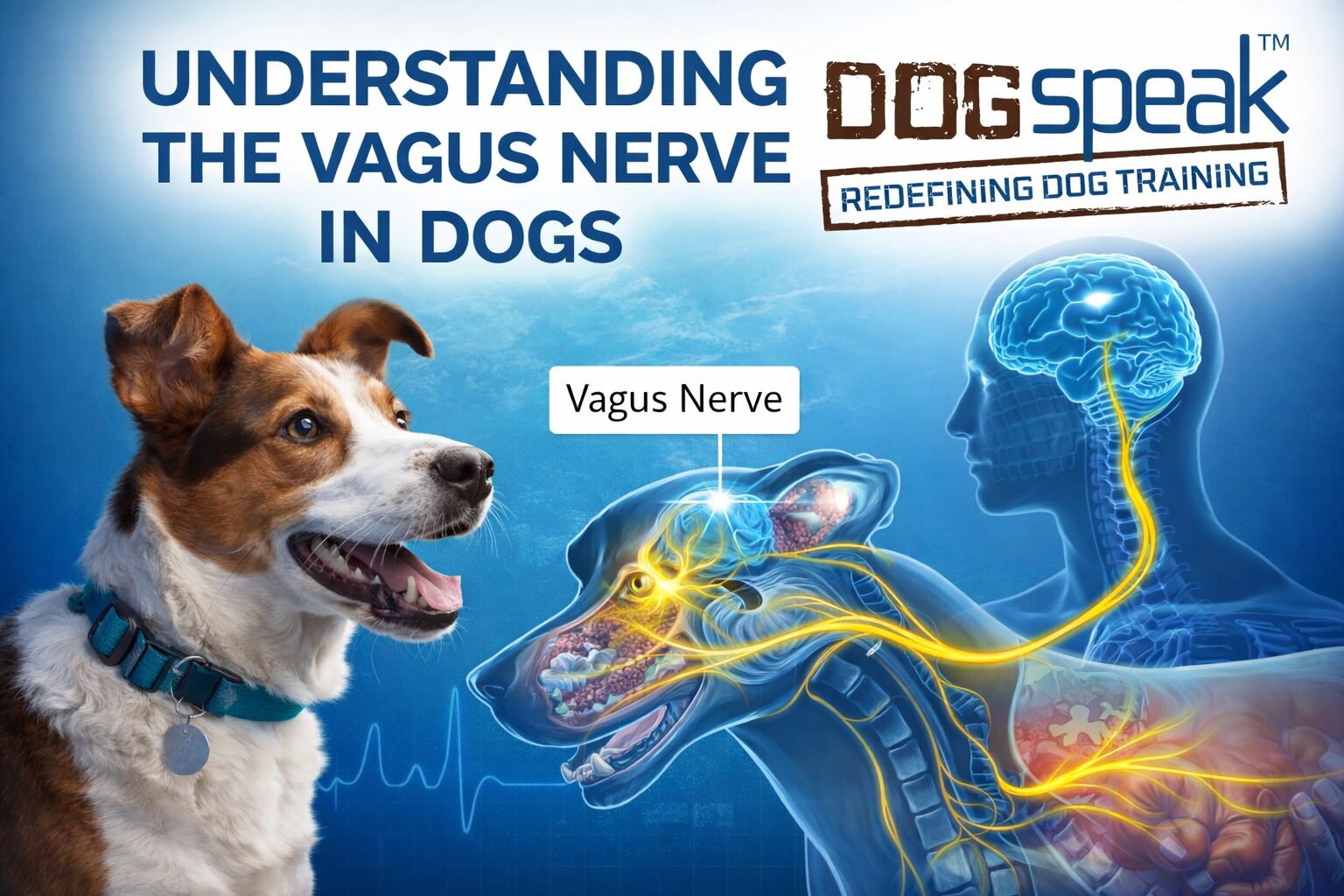
At the center of that nervous system is the vagus nerve — a powerful pathway that influences whether your dog feels safe enough to rest, connect, and learn… or whether they remain stuck in survival.
Understanding the vagus nerve changes how we see behavior. It shifts the question from “How do I stop this behavior?” to “Does my dog feel safe in their body?”
What Is the Vagus Nerve?
The vagus nerve is the longest cranial nerve in the body. It runs from the brainstem through the throat, heart, lungs, and digestive tract. It is a major component of the autonomic nervous system — the system that regulates heart rate, breathing, digestion, and emotional responses.
You may have heard of the fight-or-flight response. That response is part of the sympathetic nervous system — the survival branch.
The vagus nerve belongs to the parasympathetic system — the branch responsible for rest, digestion, connection, and recovery.
In simple terms:
- Sympathetic system = mobilization (survival)
- Vagus nerve = regulation and safety
When the vagus nerve is functioning well, your dog can move in and out of stress and return to baseline. When it is dysregulated, the body struggles to shift out of survival mode.
Why the Vagus Nerve Matters in Dogs
Dogs do not choose reactivity.
They do not choose shutdown.
They do not choose hypervigilance.
These are nervous system states.
A well-regulated vagal system allows a dog to:
- Recover from startling events
- Digest food properly
- Sleep deeply
- Engage socially
- Learn new behaviors
- Adapt to change
A dysregulated vagal system may look like:
- Chronic anxiety
- Over-arousal or reactivity
- Gastrointestinal issues
- Shallow breathing
- Difficulty settling
- Sudden freezing or shutdown behaviors
When the vagus nerve struggles, the body interprets the world as unsafe — even when it isn’t.
And no amount of obedience training can override a body that feels threatened.
The Two Branches of the Vagus Nerve
The vagus nerve has two primary branches that influence behavior:
Ventral Vagal (Connection and Safety)
This branch supports social engagement, calm alertness, curiosity, and bonding. When active, your dog can make eye contact, respond to cues, and relax in your presence.
Dorsal Vagal (Shutdown and Collapse)
This branch activates during overwhelming stress. It may look like freezing, avoidance, learned helplessness, or low energy after prolonged stress.
Understanding this distinction is critical. Not all “calm” dogs are regulated. Some are shut down.
What Dysregulation Looks Like
Chronic stress reshapes the nervous system.
Dogs who have experienced trauma, unpredictable environments, pain, or ongoing stress may become stuck in:
- Sympathetic dominance (constant fight-or-flight)
- Dorsal shutdown (collapse and withdrawal)
- Rapid swings between the two
This is why some dogs appear reactive one moment and withdrawn the next. Their nervous system has not learned how to find safety consistently.
Behavior is the output of the nervous system. Regulation is the foundation for change.
How to Support the Vagus Nerve in Dogs
We cannot command a nervous system into regulation.
We must create the conditions for it.
Here are supportive approaches:
- Safety Before Skills
Predictability, routine, and clear boundaries help the nervous system relax. Training should feel safe, not pressured.
- Co-Regulation
Dogs regulate through connection. Your tone of voice, breathing, posture, and emotional state matter. A calm human can help cue safety in a dysregulated dog.
- Focused Touch
Massage, TTouch, and gentle contact can stimulate parasympathetic activity and support vagal tone.
- Breath and Pace
Slow movement, slower transitions, and structured decompression walks allow the nervous system to shift out of urgency.
- Environment Matters
Lighting, sound, crowding, and chaos all impact regulation. Sometimes healing begins with reducing sensory overload.
From Control to Connection
When we view behavior through the lens of the vagus nerve, we stop asking, “How do I fix this?”
Instead, we ask:
- Does my dog feel safe?
- Can their body recover from stress?
- Am I addressing the nervous system or just the behavior?
Healing chronic stress in dogs is not about suppressing behavior. It is about restoring regulation.
The vagus nerve is not just a biological structure. It is the pathway back to safety.
And safety is where learning — and true transformation — begins.